
 Maya Chen
Everyone agrees a plan would help. Nobody volunteers to write it. You already know the outcome — the client can run the new intake without you in the loop — and turning that sentence into twenty tasks with sensible durations is an hour of typing before anyone can even react to it. Then, two weeks later, three things have moved, and updating the plan means opening a document nobody has looked at since kickoff.
This is for the person who ends up owning that plan for something several people touch: a launch, a migration, an onboarding, a client project. It is not a fit if you want AI to run the project for you. This one drafts and amends. You decide what lands.
In plain English: Goalpen is a living goal tree you can draft by talking — Ask AI proposes the rows, you argue in English, then each owner keeps their own branch.
Why the plan never really gets built
It is not that people dislike planning. It is that the first version costs an afternoon and every version after that costs an argument.
The blank page is the first tax. You sit down meaning to be useful, and you are still inventing row names forty minutes later. The fortnight problem is the second. Reality moved; the document did not; opening it now means remembering what it was supposed to say. The bottleneck is the third. Because you built it, every correction routes through you. Someone messages you a change. You make the edit. You are now maintaining a plan on behalf of five people who are all closer to the work than you are.
So the plan quietly turns into a document rather than a tool, and the team goes back to chat.
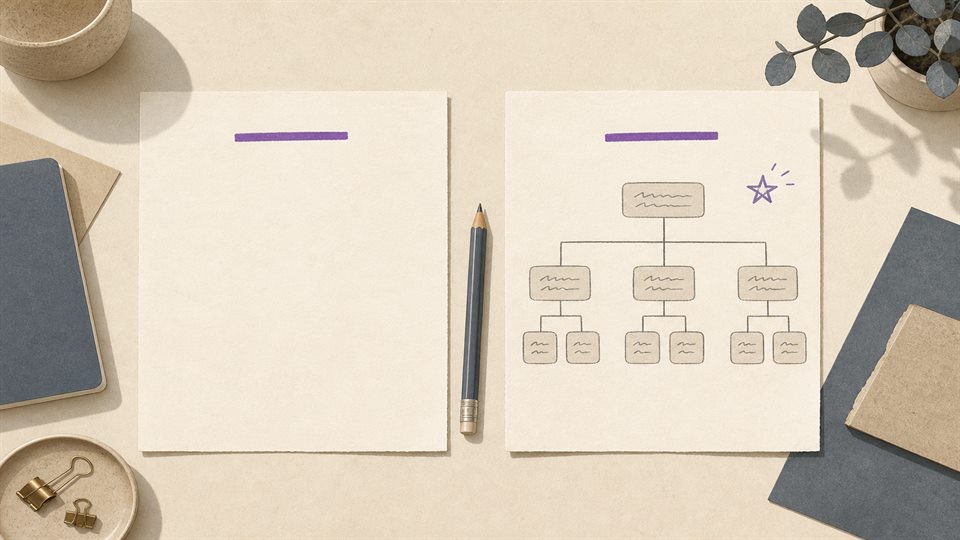
If you have been the person who “owns the plan,” keep reading. The next part is the conversation, then the screenshot of the draft beside the tree.
Write the sentence. Then talk to it.
In Goalpen the plan is a goal tree, so you start with the root: that one sentence you would defend on Friday.
Then you open Ask AI and you talk the way you would talk to a colleague who is good at first drafts. “Draft the work under this goal for a six-week intake launch. Design, build, training, client sign-off. Put a duration on each row.”
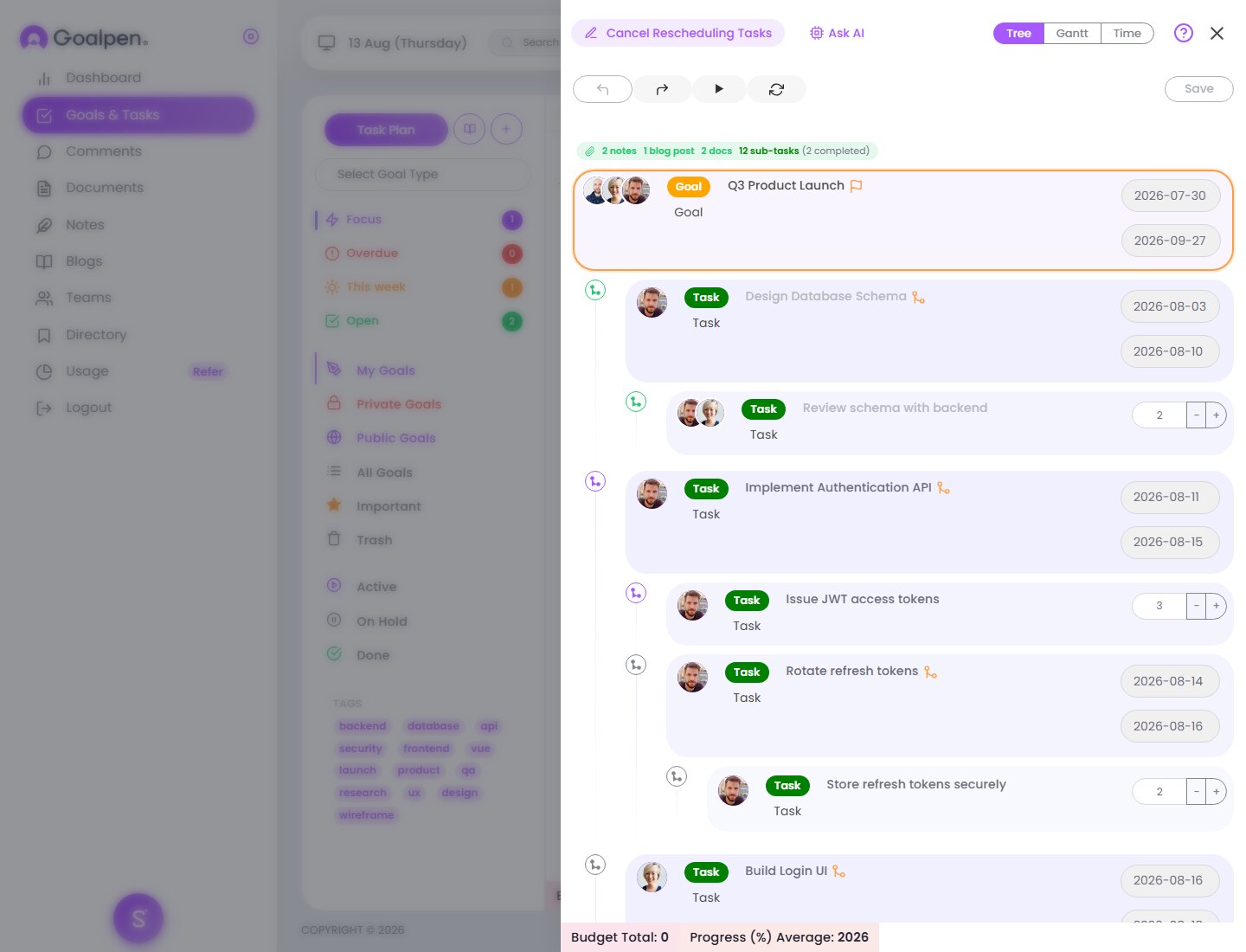
What comes back is not a paragraph of advice. It is a tree sitting beside the live one: tasks, nested steps, a number of days on each row. The first pass is usually a bit much. That is the point of a first pass. You push back in the same English. “Too many rows. Drop the training for now — we will hang that later. Stretch the legal bit; they always take a fortnight. Rebuild the build branch under ‘the endpoint is live in staging,’ not under ‘code complete.’”
Each reply reshapes the draft. The live tree has not moved. You can dismiss the whole thing. You can undo the last turn. While it is drafting under the goal it will not delete, move or reorder work you already have. When the draft looks like a plan a human would actually run, you press Apply, and those rows become the tree.
Ask AI comes with the Team and Business plans. A Free workspace sees a demo of what it produces, plus an upgrade prompt, rather than the live version.
Then hand out branches, not chores
This is the part that decides whether a plan survives a real month.
If you keep amending every row yourself, you are back to being the bottleneck, only now the bottleneck has a nicer tree. The branch is the unit of ownership. Whoever owns a branch — plus anyone whose face is on that card as a co-owner — can amend that whole part of the tree without asking you. They rename the work. They change durations. They add the steps that turned out to be necessary.
The migration branch is kept honest by the person doing the migration. The training branch is kept honest by whoever runs training. You keep the root and the finish line. If reality changes the shape of someone's branch rather than just its detail, they can describe the change and let AI propose the patch instead of queueing behind you.
The plan then stays current not because five people are disciplined about updating a document, but because updating it is the same action as doing the work.
Build one plan this way and see whether it is still true in three weeks
Take a delivery you already own. Write the outcome as the root. Ask AI to draft the branches, cut whatever does not belong, and apply it. Put a name on each branch and tell those people the branch is theirs to amend. Next Friday, open the root and ask the only question that counts: did the outcome move?
Prefer to talk it through first? Use Contact us. Want the numbers before anything else? Skim Pricing. No hard sell either way.
*Current page check: “argue with the draft in English, then Apply” (13 August 2026).*